

Connect to your server
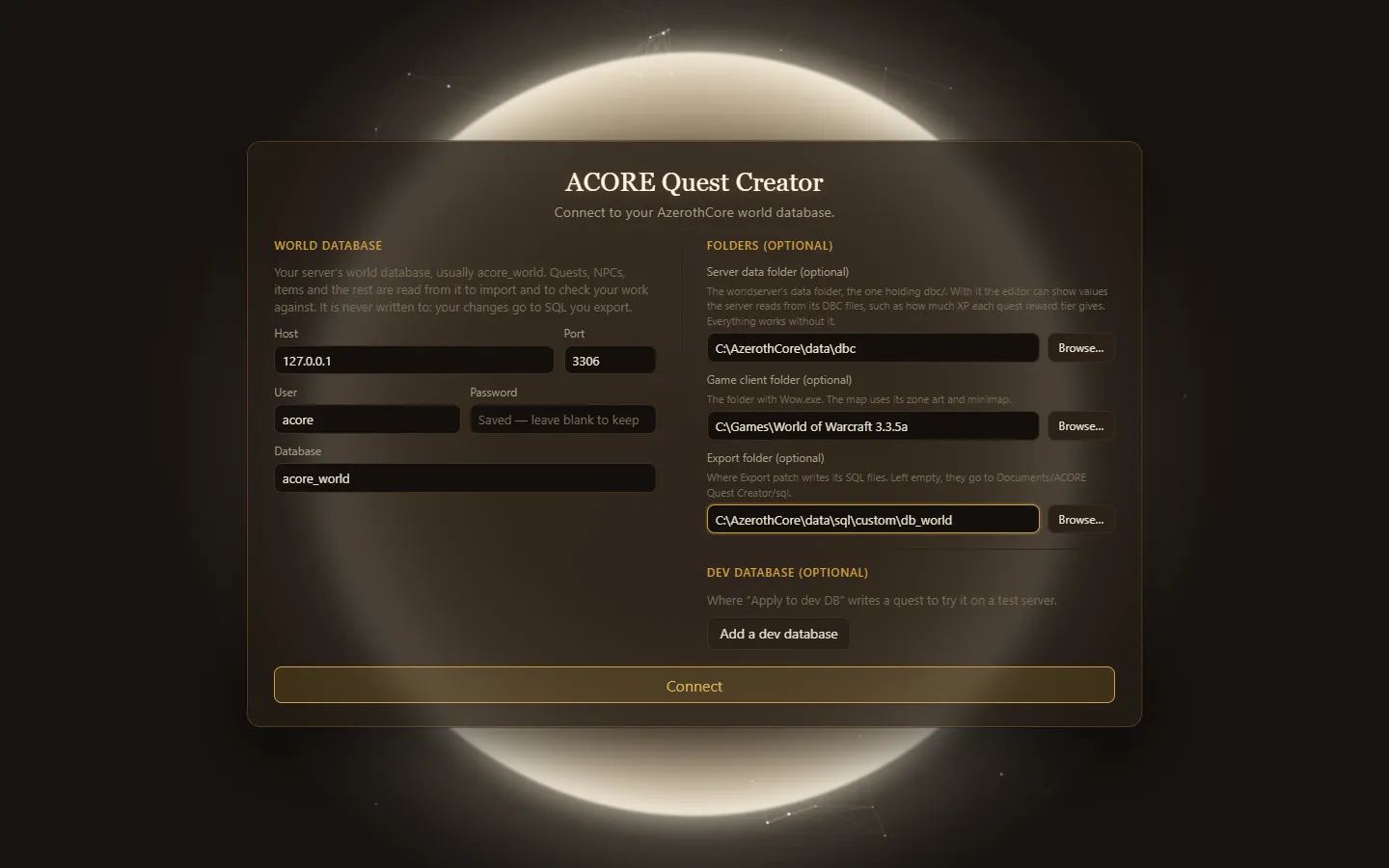
The first screen asks where your world database is. Fill it in once; the app remembers it and offers it again next time.
World database
Section titled “World database”Your server’s world database, usually acore_world. Quests, NPCs, items and the rest are read from it to import and to check your work against. It is never written to: your changes go to SQL you export, or to a dev database you add yourself.
- Host and Port: where MySQL runs, for example
127.0.0.1and3306. - User and Password: a MySQL user that can read the world database. Read-only rights are enough.
- Database: the world database’s name.
The password is stored encrypted on your computer. Once one is saved, the field reads Saved — leave blank to keep.
Folders (optional)
Section titled “Folders (optional)”- Server data folder: the worldserver’s data folder, the one holding
dbc/. It lets the app show XP values for reward tiers, search spells and creature or object models by name, and snap spawns to the ground on the map. Everything works without it; those parts fall back to typing IDs. - Game client folder: the folder with
Wow.exe. The quest map uses its zone art and minimap. - Export folder: where Export patch writes SQL files, such as your server’s
data/sql/custom/db_world. Left empty, they go toDocuments/ACORE Quest Creator/sql.
Use Browse… to pick a folder instead of typing it.
Dev database (optional)
Section titled “Dev database (optional)”Add a dev database to turn on Apply to dev DB, which writes a quest straight into a test server’s world database so you can try it in game. Use a copy of your world database on a test server, never your live one.
Connect
Section titled “Connect”Choose Connect. The top bar then shows what the app reached: Connected: database, plus Server data and Game client when those folders opened.
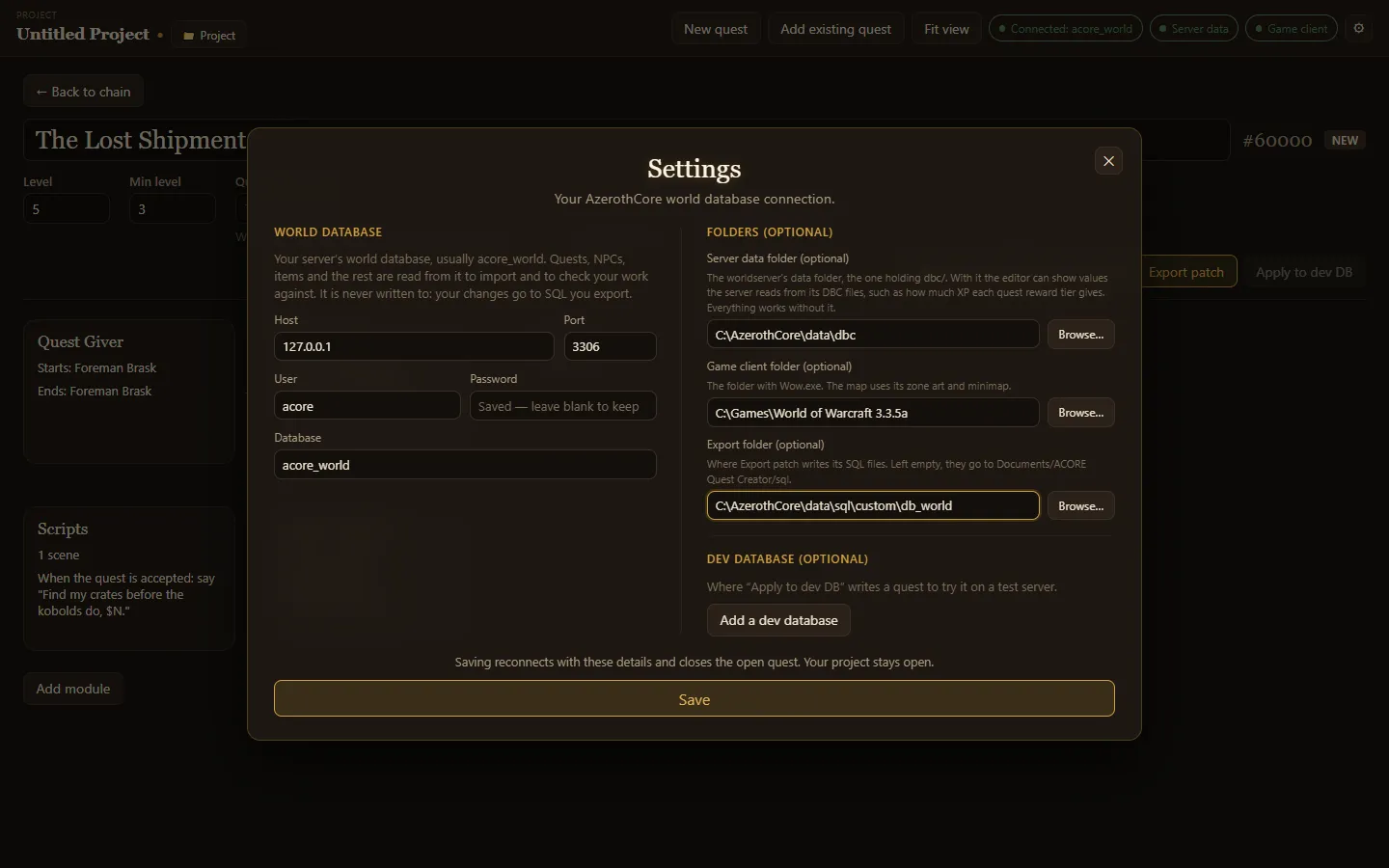
To change any of this later, choose the ⚙ button in the top bar to open Settings. Saving there reconnects with the new details and closes the open quest; your project stays open.
Next: your first quest.